Fun facts about one of Alaska’s largest mammals (and where to see one near Anchorage)
Alaska is home to the largest moose subspecies in the world (Alces alces gigas). One of the famous “Big Five” mammals on most visitor bucket lists (along with bears, wolves, Dall sheep, and caribou), moose are a reminder that our cities share space with all kinds of wild critters, especially in Anchorage.
How Many Moose Live In Anchorage?
In the Anchorage municipality, the local moose population is nearly 1,500, with almost 300 making their habitat where people live, work, or play: yards, city trails, or even hotel parking lots. For such a large animal, moose are surprisingly quiet, and many a human has come upon one while recreating or moving about their day. Children are educated early on how to safely live with moose, and just about everyone has a story about being late to work or school due to a moose impeding their vehicle access.
We know you’re curious about these big creatures, and we also know you probably want to see one (or more). Here are some quick Alaska moose facts and the best way to safely enjoy one of Alaska’s most iconic animals.
How Big Is A Moose? Height, Weight, and Antlers
How tall is a moose?
A fully grown adult moose can reach six feet at the shoulder, and even taller with the antlers. For perspective, a moose’s back is often higher than the top of your head.
How much does a moose weigh?
Alaska bull moose weigh up to 1,600 pounds, and cows weigh between 800 and 1,300 pounds. Moose calves, born in May or June, weigh 25 to 35 pounds at birth.
Do female moose have antlers?
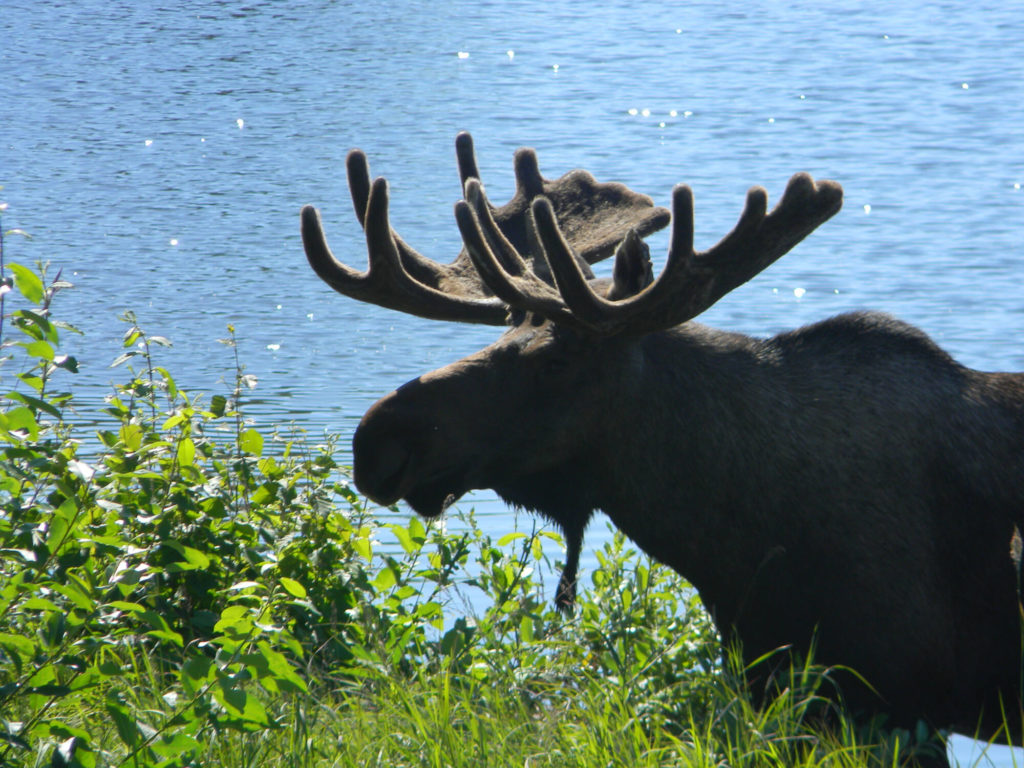
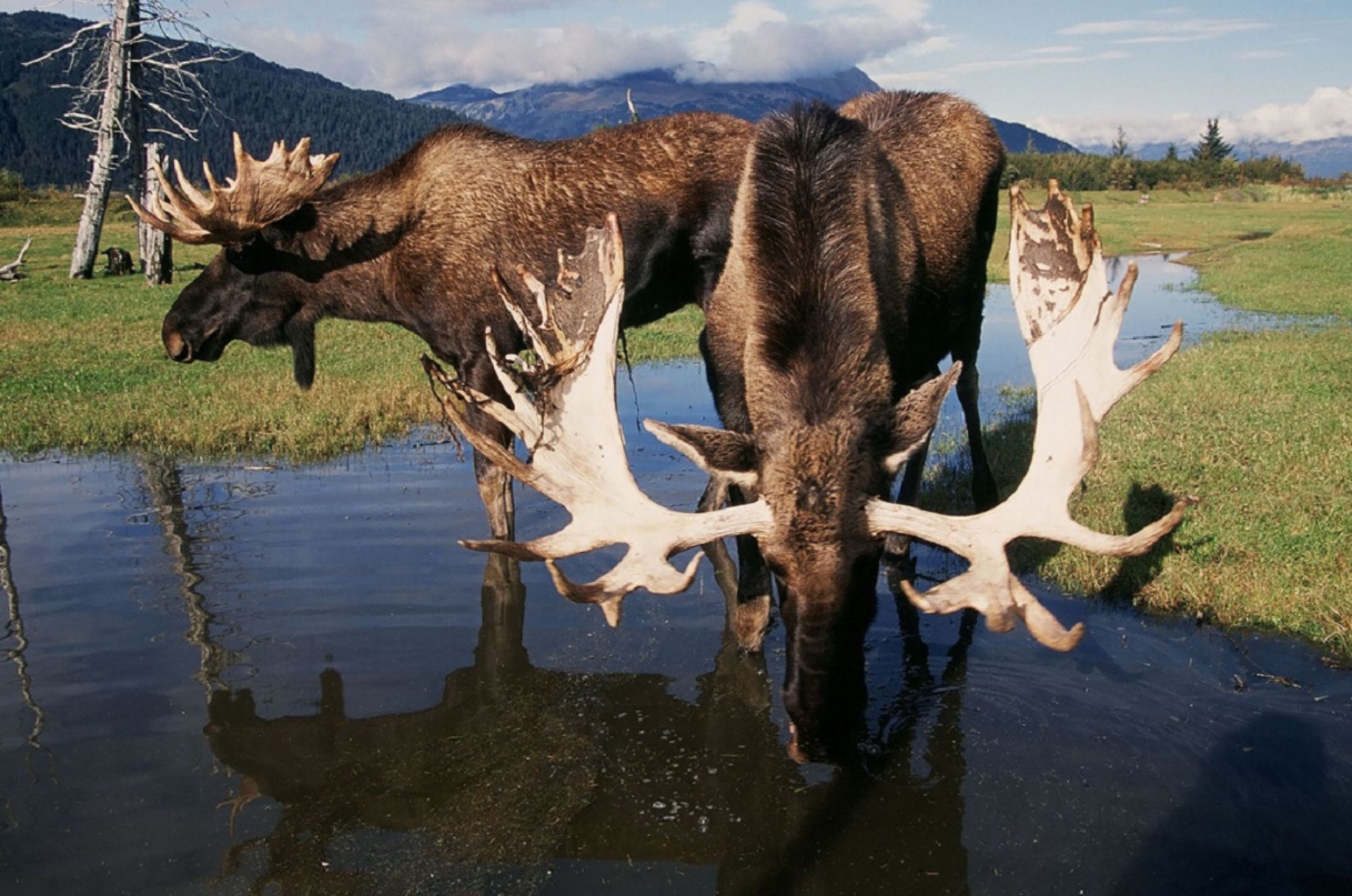
No. Only bulls grow them, starting in their first year of life. Antlers grow over the summer at a rate of up to one inch of length and a pound of bone mass each day. By the time fall breeding season arrives (known as the “rut”), the rack of antlers can weigh up to 75 pounds, with bulls using them as a sparring tool against rival males.
When do moose shed their antlers?
In early winter, after the fall rut. It’s quite a quick process of shaking them loose, and lucky for the finder of a moose shed in their front yard!
More Fun Facts About Alaska Moose
What’s the plural of moose?
Moose. Not “meese” or ” moosen”, sadly.
How fast can a moose run?
When threatened, a moose can run at a speed of around 35 miles per hour in short bursts. For quick movement over longer distances, moose tend to trot at a speed of about 20 miles per hour. Fun fact: Moose can also run through snow up to three or four feet deep, thanks to their long, gangly legs.
What is a group of moose called?
Technically, a group of moose would be called a “herd.” That said, moose are not joiners, preferring a mostly solitary life. They will hang out with one or two other moose, often siblings or mother-calf combos, but large herds, like deer, are not often seen.
Where To See Moose Near Anchorage
Are there moose in Anchorage?
Yes, and lots of them, all year round. During the spring, cows will deliver their calves in populated areas to avoid natural predators like bears. In the winter, moose return to local neighborhoods and fields to browse on woody shrubs and leftover garden stuff. Since local streets are cleared of snow quickly, Anchorage’s urban moose population has learned that life is easier when walking the roadways, and they often cause traffic jams due to their indifference to cars or people.
Note: Moose may look calm, but they are wild animals and will charge if they feel crowded. Cows with calves are especially protective. Give every moose plenty of space, and back away slowly if one lays its ears back or raises the hair on its hump.
Let Our Local Guides Do The Moose Spotting: Anchorage Alaska Wildlife Tours
One of the advantages of a company like Greatland Adventures is an all-local guide team who live in Anchorage full-time and know where the moose hang out, all year. Even if your tour is not one of our Anchorage Alaska wildlife tours, the Greatland guides have the scoop on when and where, and they’ll make sure you enjoy the view from a safe distance.
Fall, Winter, and Spring: Turnagain Arm Winter Tour
During the winter months, Greatland’s Turnagain Arm Winter Tour offers a high likelihood of spotting moose, either along the Anchorage Coastal Wildlife Refuge just south of town, or along the Turnagain Arm area itself, including the community of Girdwood. But there’s also a moose sighting you can count on! On this all-day tour, guests will experience the Alaska Wildlife Conservation Center located in the Portage area about 40 miles from Anchorage, where staff rehabilitate and raise animals and birds no longer able to live on their own, including moose. The tour includes admission to the AWCC and the chance to walk or drive the beautiful property. Offered during the fall, winter, and spring months, the tour is a great way to experience the grandeur of Southcentral Alaska.
Summer: Turnagain Arm Glacier and Wildlife Tour
For summer visitors, the Turnagain Arm Glacier and Wildlife Tour adds a boat tour of beautiful Portage Glacier, just a short drive from the Alaska Wildlife Conservation Center. Whichever season or tour you choose, the moose will be waiting!
Plan Your Alaska Moose Adventure
For a complete listing and descriptions of all our adventure tours in Alaska, visit the Greatland Adventures tours page, and don’t hesitate to give us a call with any questions. Our team is ready to help plan the Alaska vacation of your dreams!
Frequently Asked Questions About Alaska Moose
Is a moose bigger than a horse?
Yes. An adult Alaska moose can stand about six feet at the shoulder and weigh up to 1,600 pounds, which makes it taller and heavier than most horses. Add a full rack of antlers and it’s no contest.
Where can I see moose near Anchorage?
Moose are often spotted on Anchorage city trails, in greenbelts and neighborhoods, at the Anchorage Coastal Wildlife Refuge just south of town, and along Turnagain Arm toward Girdwood. For a sighting you can count on, the Alaska Wildlife Conservation Center near Portage, about 40 miles from Anchorage, cares for moose that can no longer live on their own in the wild.
What is the best time of year to see moose near Anchorage?
Any time of year. Moose live in and around Anchorage year round, but winter is often the easiest season to spot them, since snow pushes them into neighborhoods and along cleared roadways. Spring brings newborn calves, which are best enjoyed from a respectful distance.
Is it safe to get close to a moose?
No. Moose will charge if they feel threatened, and cows with calves are especially protective. Keep plenty of distance, never walk between a cow and her calf, and back away slowly if a moose lays its ears back or raises the hair on its hump.
Can I see moose on a guided tour from Anchorage?
Yes. The Turnagain Arm Winter Tour (fall through spring) and the Turnagain Arm Glacier and Wildlife Tour (summer) both travel through prime moose territory and visit the Alaska Wildlife Conservation Center.